
The Signal Atlas · Episode 1
The Signal Atlas, Episode 0: The Ghost Signal
A signal ticks in from the dark every 1.337 seconds and Noor is sure it is a message. An 84-second space mystery cartoon about pulsars.
Chapters 5
The pilot of The Signal Atlas, Space Radar's mystery cartoon set in an observatory on the Moon. A signal arrives that ticks like a clock. Noor is sure someone is sending it; KEY thinks it may be the station's own motor. They switch the motor off: still ticking. Then the atlas wall shows the source turning with the stars, and a card from 1967 gives the answer Jocelyn Bell found: not a message but a pulsar, a dead star whose beam sweeps past us like a lighthouse. Every turn, one pip.
The beat of the music is the star's real period, 1.337 seconds. Every drawing is made in code and animated by hand-set timing, frame by frame; no video in it is generated. The live map has 4,383 pulsars on it.
Transcript
37 lines · read along
The lines as written for the film, from its caption file. Both voices are synthetic.
0:00 A signal from the dark
[A signal from the dark: one pip, again and again] NOOR: That's not noise. NOOR: It's ticking. NOOR: Like a clock. KEY: One pip every 1.337 seconds. KEY: Exactly.
0:17 Is it a message?
NOOR: Someone is sending it! NOOR: It's a message! KEY: Or it is us. KEY: The solar motor ticks too. NOOR: Motor off. [The motor stops. The pips go on.] KEY: Still ticking. NOOR: Not us. NOOR: So it is a message! KEY: A message would change. KEY: This only ticks.
0:40 It turns with the stars
KEY: Now look. KEY: The sky turns. NOOR: And our ghost turns with it! NOOR: It lives out among the stars! KEY: Searching by rhythm. KEY: One card. KEY: 1967.
0:52 The answer: a pulsar
KEY: Jocelyn Bell found the same tick. KEY: They nicknamed it Little Green Men. NOOR: So it was aliens! KEY: No. It was a star. KEY: A dead star, spinning. KEY: Its beam sweeps past us, like a lighthouse. NOOR: Every turn, one pip. NOOR: A pulsar! KEY: Over four thousand pulsars are on the map.
1:11 Two maps, one star
KEY: Noor. The old map puts ours somewhere else. NOOR: Two maps. NOOR: One star? NOOR: Then we map it.
How it was made
- The observatory on the Moon, Noor, KEY, the solar motor, the archive card and the old sky chart are made up. That this observatory hears the first pulsar is story; the pulsar, its 1.337-second period, Jocelyn Bell, 1967 and the nickname are real.
- A radio signal makes no sound: the pips are the signal turned into sound. The diagram of the pulsar is not to scale, and the turning sky on the wall is sped up.
- The 4,383 dots on the atlas wall are placed by a formula. They are not the pulsars' real positions; those are on the live map.
- Both voices are synthetic (Kokoro text to speech). The words are ours.
- The picture is drawn and animated in code. No part of it is generated video.
Credits
- Story, drawing, animation, music and sound: Space Radar.
- Voices: Kokoro-82M text to speech (Apache-2.0), pitched for each character.
- Fact, the first pulsar, its 1.33730 s period and the nickname LGM-1: NRAO, Tick Tock, Pulsating Star (read 2026-11-20); ATNF Pulsar Catalogue.
- Fact, Jocelyn Bell at Cambridge in 1967, and the signal keeping its place among the stars: University of Cambridge, Journeys of Discovery; Jocelyn Bell Burnell, Little Green Men, White Dwarfs or Pulsars? (read 2026-11-20).
- Fact, a pulsar is a spinning neutron star like a lighthouse: NASA, Imagine the Universe; Condon and Ransom, Essential Radio Astronomy, chapter 6 (read 2026-11-20).
- Typeface: Barlow Semi Condensed (SIL Open Font License). Easing curves: GSAP.
More films
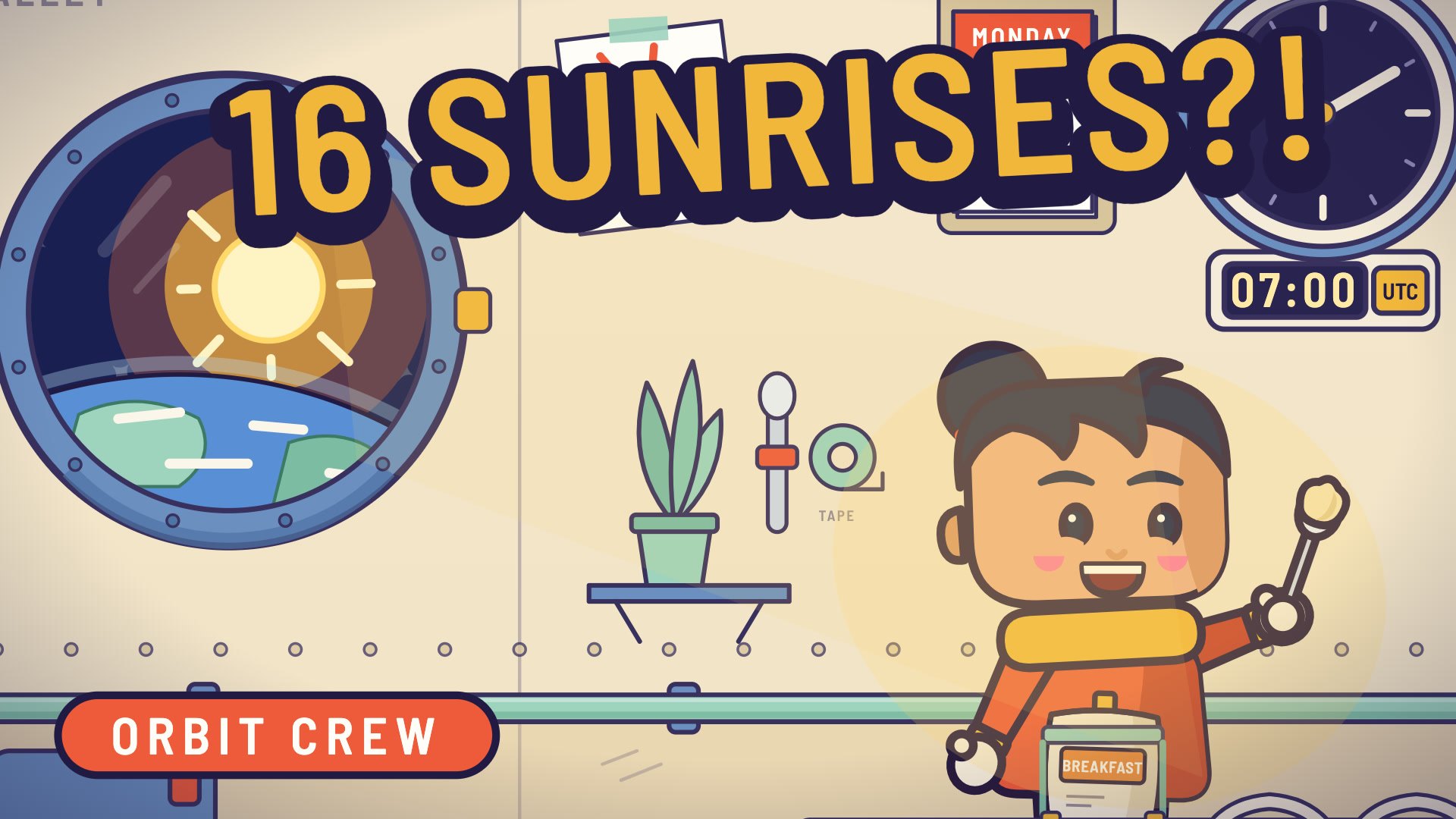
Orbit Crew, Episode 1: Sixteen Sunrises
The Sun keeps coming up while Captain Ada eats breakfast. A seven-minute space cartoon about why a station crew sees 16 sunrises a day.
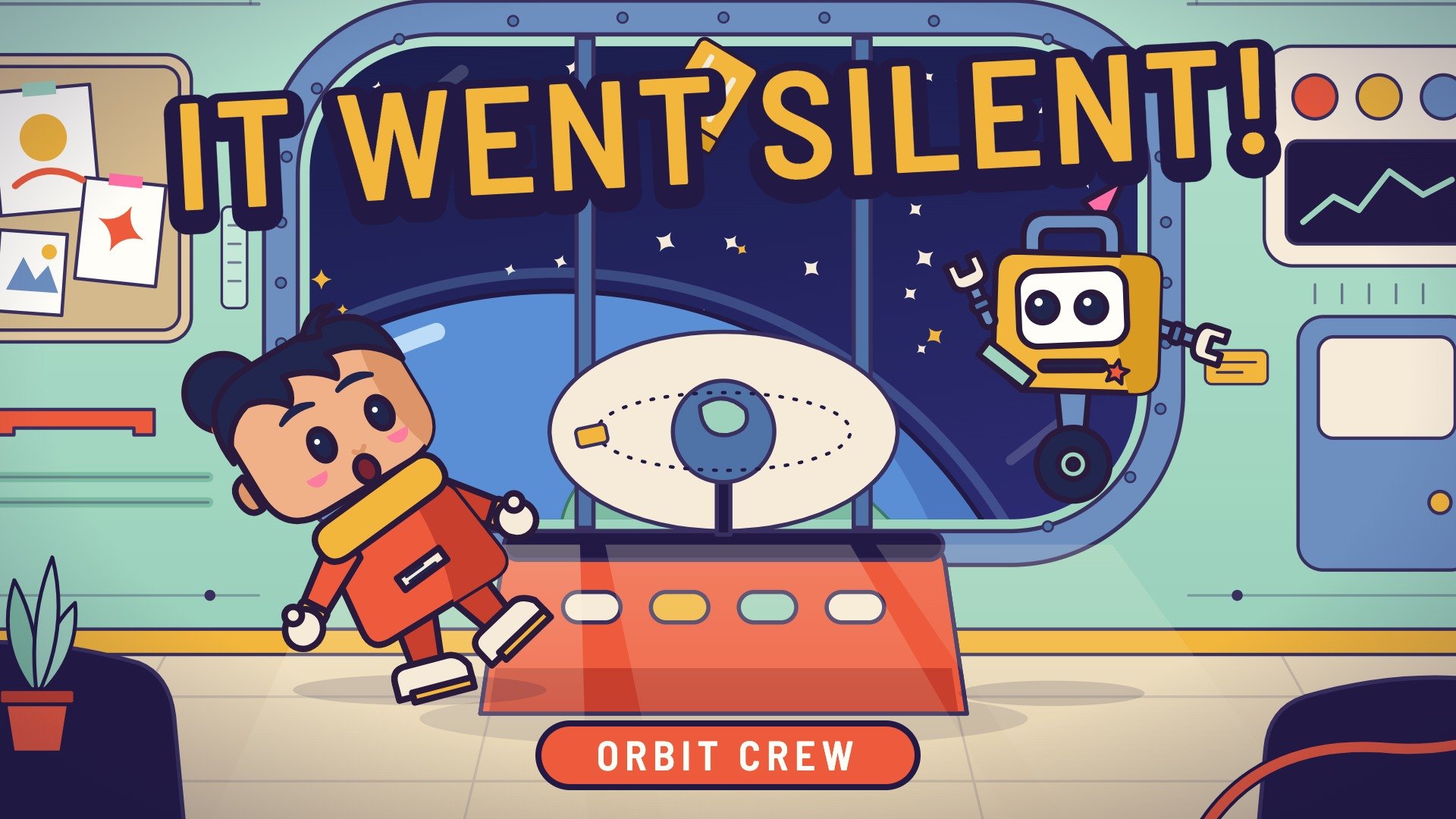
Orbit Crew, Episode 0: The Silent Satellite
A satellite stops talking and Captain Ada is sure it is broken. A 70-second space cartoon about why radio needs a clear straight path.
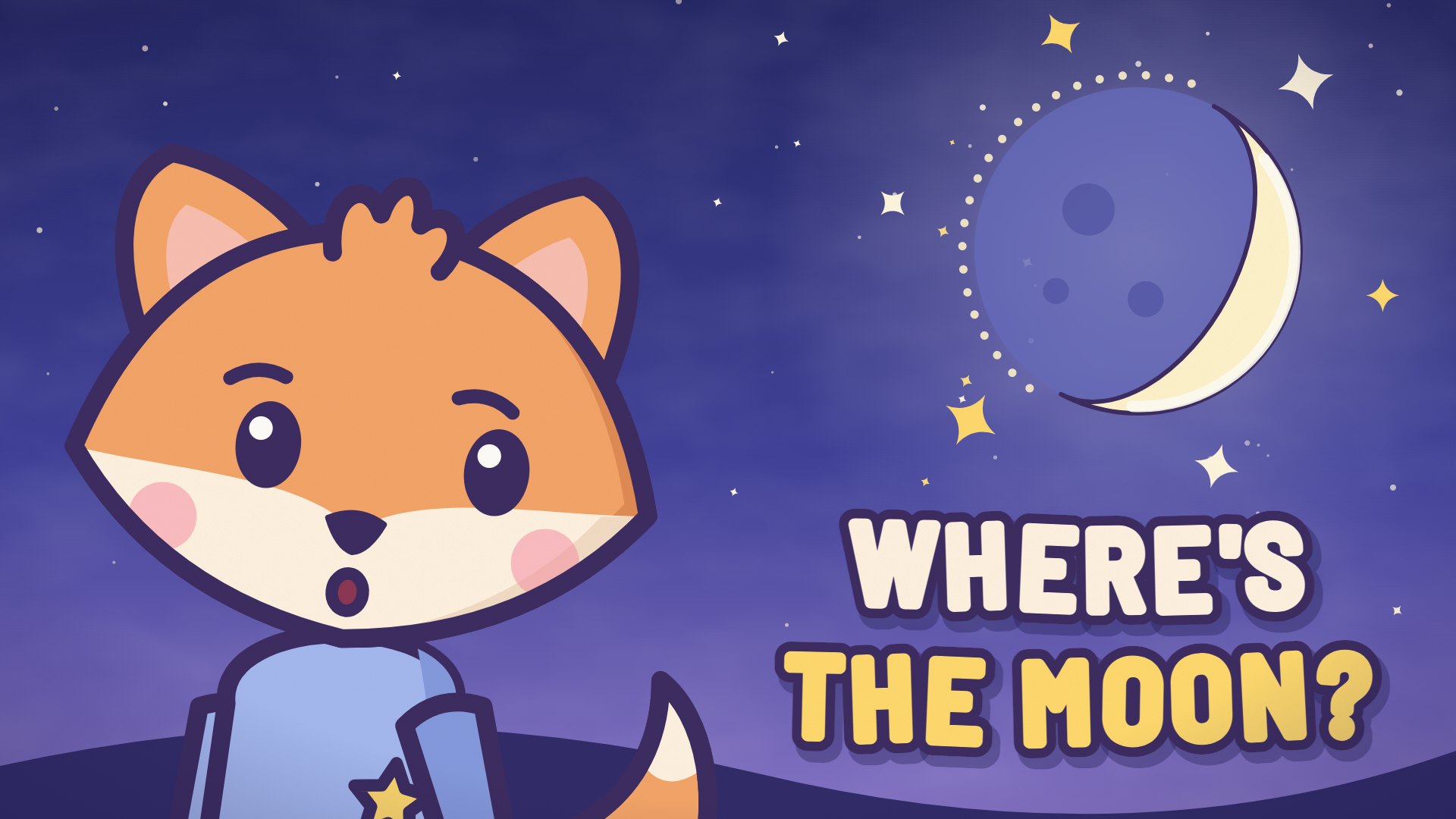
Pip & the Little Sky, Episode 0: Where Did the Moon Go?
Pip the little fox cannot find the Moon at bedtime. A calm 75-second cartoon for ages 3 to 5 about why we sometimes see only a thin slice.